

ggforestplotR provides a ggplot2-first
workflow for building forest plots from tidy coefficient tables or
fitted model objects.
install.packages("ggforestplotR")#install.packages("remotes")
remotes::install_github("thatoneguy006/ggforestplotR")ggforestplotR currently supports two core workflows:
Both workflows are converted to a validated forest_data
object before plotting. This object records the effect scale, confidence
level, reference value, and source provenance independently of the
fitted-model class.
library(ggforestplotR)
library(ggplot2)

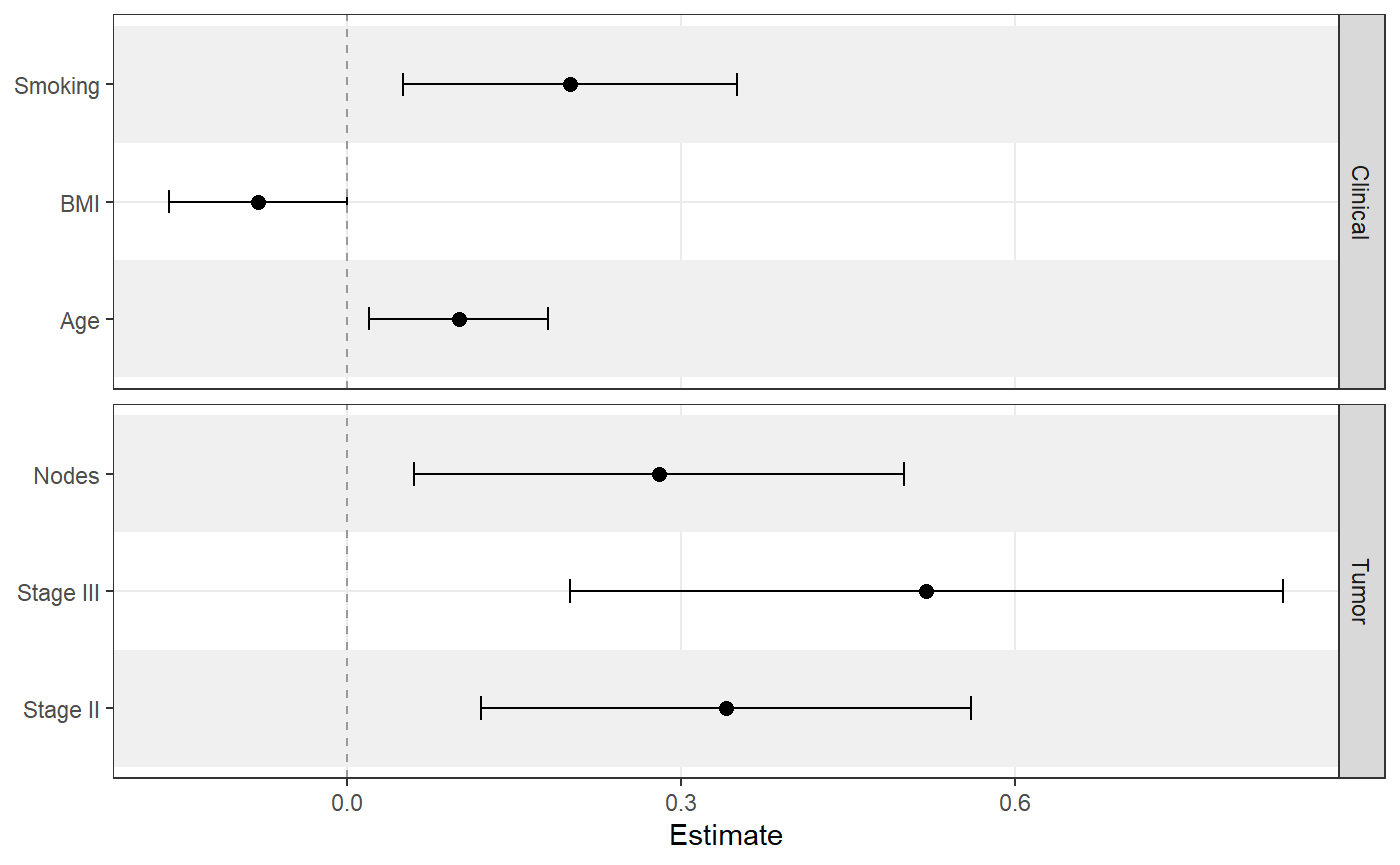
sectioned_coefs <- data.frame(
  term = c("Age", "BMI", "Smoking", "Stage II", "Stage III", "Nodes"),
  estimate = c(0.10, -0.08, 0.20, 0.34, 0.52, 0.28),
  conf.low = c(0.02, -0.16, 0.05, 0.12, 0.20, 0.06),
  conf.high = c(0.18, 0.00, 0.35, 0.56, 0.84, 0.50),
  section = c("Clinical", "Clinical", "Clinical", "Tumor", "Tumor", "Tumor")
)

ggforestplot(
  sectioned_coefs,
  facet = "section",
  striped_rows = TRUE,
  stripe_fill = "grey94",
  facet_strip_position = "right"
)
ggforestplot(
  sectioned_coefs,
  striped_rows = TRUE,
  stripe_fill = "grey94"
) +
  add_forest_table()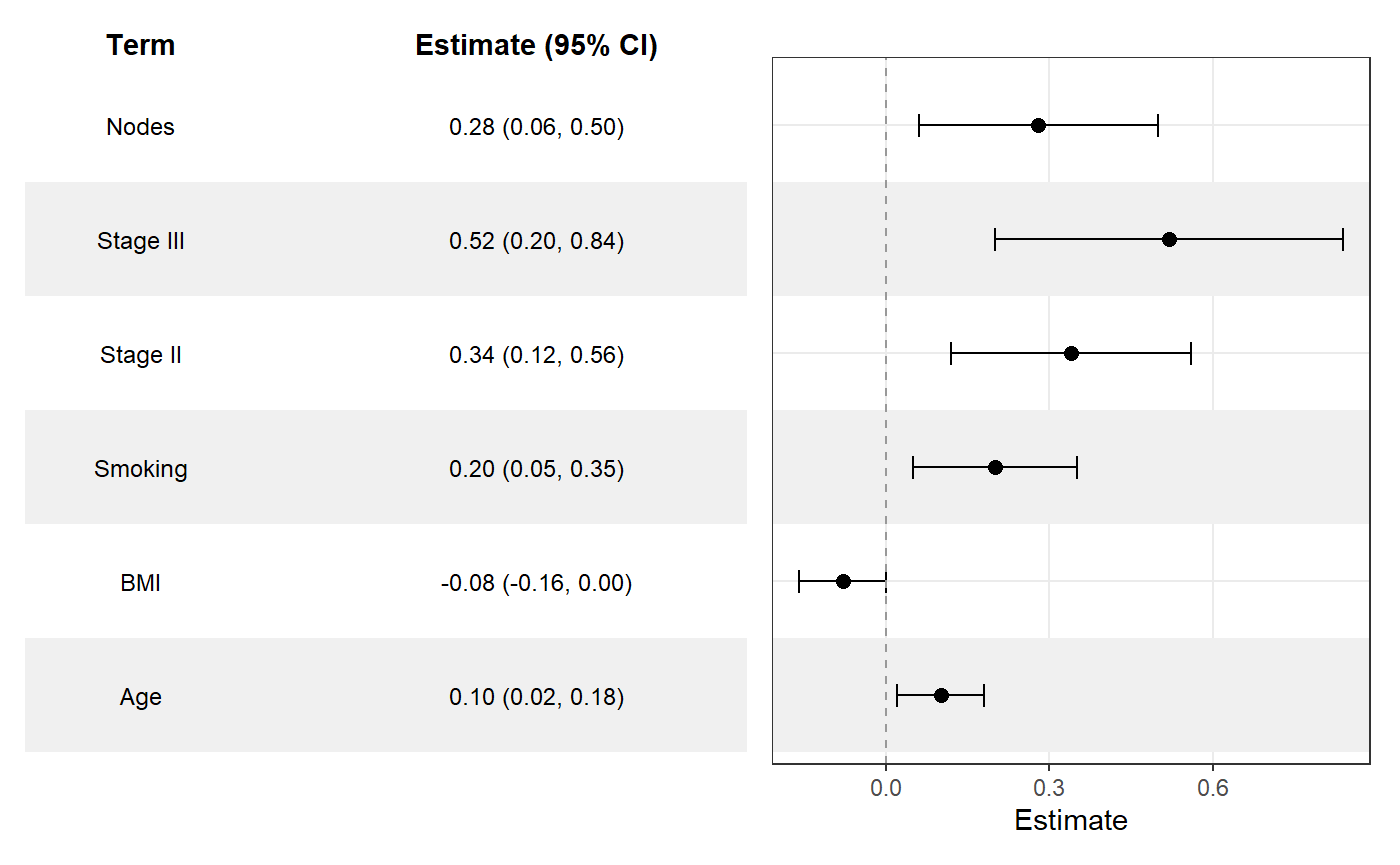
ggforestplot(
  sectioned_coefs,
  striped_rows = TRUE,
  stripe_fill = "grey94"
) +
  add_split_table()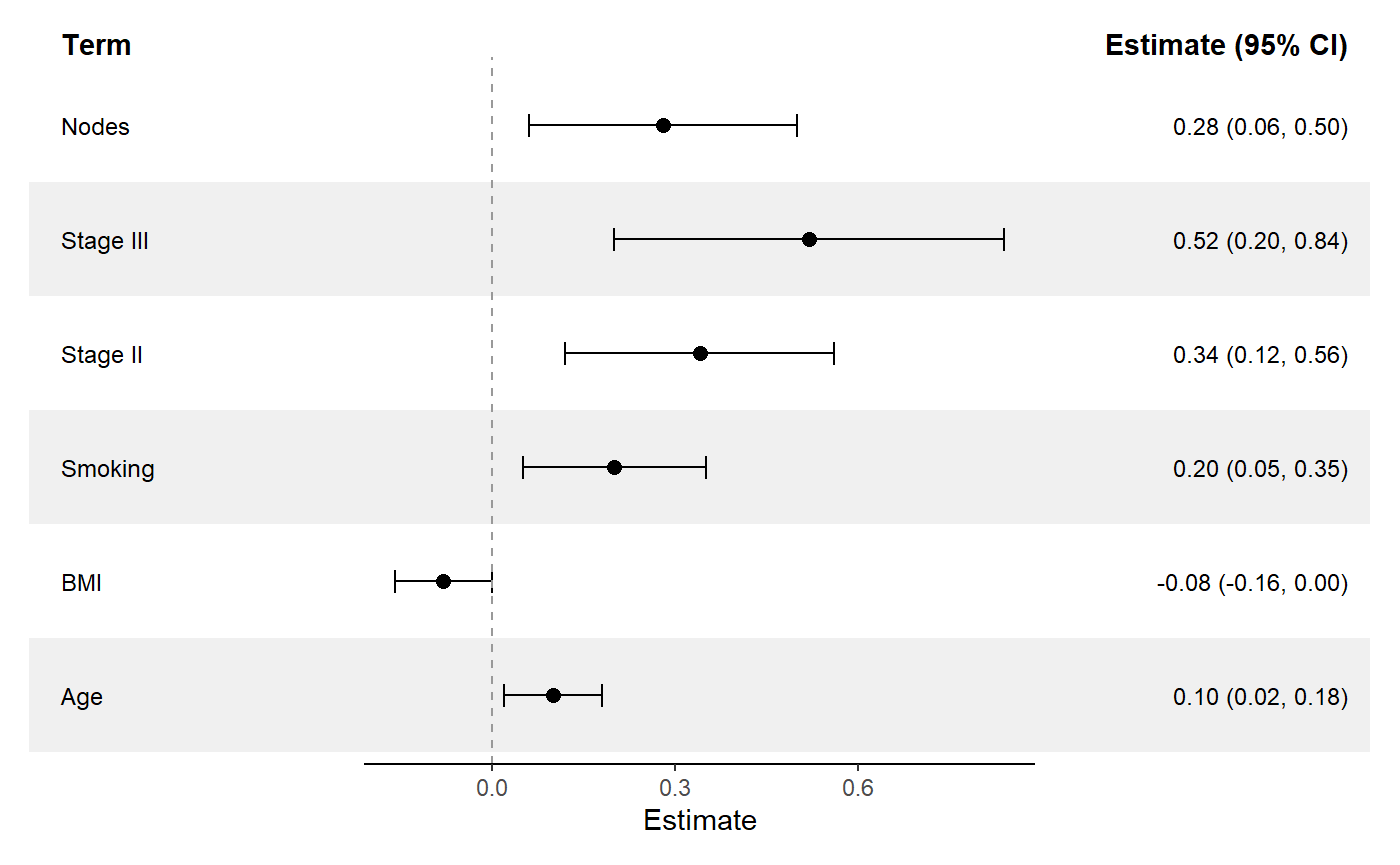
ggforestplot() builds the plotting panel from a data
frame or supported model object.add_forest_table() attaches a summary table to the left
or right side of the plot.add_split_table() creates a more traditional forestplot
layout with table columns on both sides of the plot.bind_forest_models() binds output from several models
for grouped plotting.as_forest_data() is the S3 conversion interface for
custom coefficient data and supported fitted models.forest_metadata() inspects effect-scale and source
metadata.tidy_forest_model() is used as a post-estimation
interface for fitted models.